
How do MSF project teams develop their skills in challenging contexts?
To answer this question, we had the opportunity to speak with Dr. Kimbere Kisuba, who works in an area affected by insecurity and an unstable internet connection, two major obstacles during his training.
Kimbere is a general practitioner at the Masisi Referral Hospital in the DRC, at the heart of an MSF project, where he has been working for four years. Initially serving as a surgeon, he is now part of the gynecology and obstetrics department, while also taking on a new role as the Antimicrobial Stewardship (AMS) focal point. He completed the MSF Academy for Healthcare’s Antimicrobial Resistance Learning Programme in February 2025.
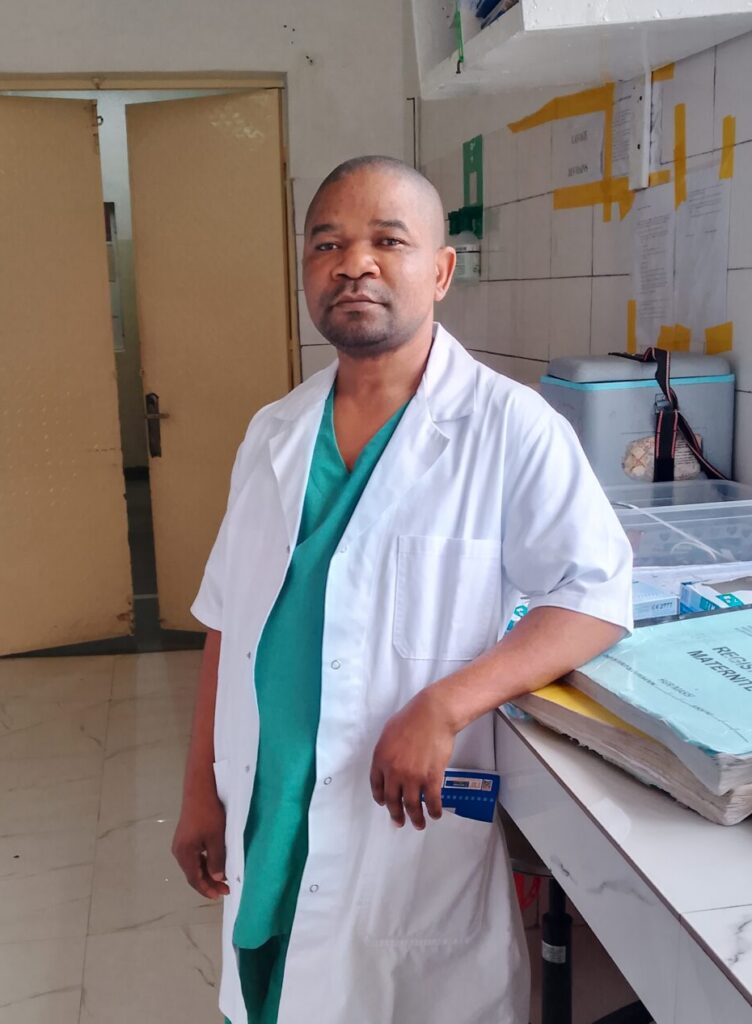
Despite the challenges, I told myself that I had to see it through to the end.
What were the biggest challenges you faced, and what helped you stay motivated ?
The security situation was difficult and sometimes discouraging, but I never gave up. There were times when we had to take refuge in the hospital to escape the fighting. During the training, I downloaded the lessons I couldn’t attend live so I could review them later at home. That allowed me to stay up to date, even without a stable connection. What kept me motivated most was my sense of responsibility. I had been entrusted with a new role, and I didn’t want to disappoint those who had placed their trust in me. Despite the challenges, I told myself I had to see it through to the end.
Can you tell us about a moment when you had to be resourceful to keep learning despite the obstacles ?
I was lucky to have access to a quiet space provided by the MSF Academy to follow my classes. Whenever possible, I would leave the hospital on time to connect from the base, where the internet connection was better. Even when we could hear gunfire outside, we stayed focused, locked in, following our online lessons. Several of us were in the same situation, which created a strong sense of solidarity.
Can you share an anecdote from your training ?
One day, while I was working in the maternity ward, I was assisting a woman in labor when a gunfight broke out. Bullets entered the room where we were. It was a terrifying moment. Two days later, a nurse showed me the wall where one of the bullets had ended up, the hole was exactly at the height of my head. Later, I shared the photo in our training group, and my colleagues sent me many comforting messages. Unfortunately, situations like this are not uncommon. It’s our daily reality.
What was your relationship like with your mentors throughout the training ?
The mentors were very available, which allowed us to make good progress. I think they can attest to my commitment, I was a dedicated student. Despite the difficulties we faced in the field, they always supported us. Sometimes, when we missed a session, they took the time to reschedule it.
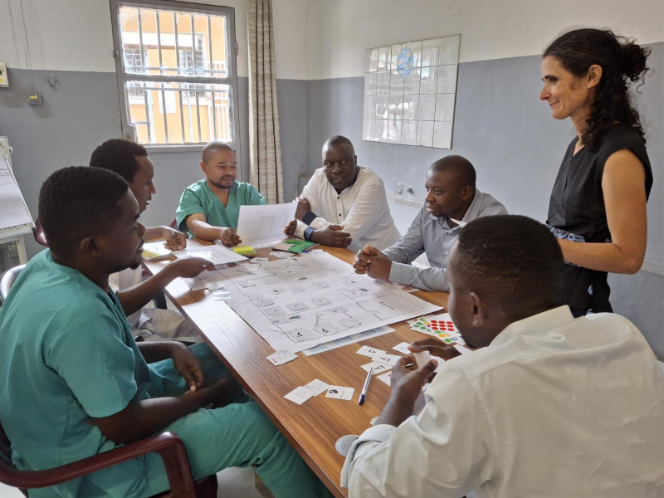
Kimbere and other participants of the AMR Learning Programme take part in a hospital infection outbreak simulation during a workshop held in Kinshasa, DRC, in 2024.
How has your vision of your role evolved since the training ?
The training allowed me to fully understand my role and to reorganize the work within the AMS committee.
We conducted a situational analysis of the hospital regarding the rational use of antimicrobials, identified priorities, and set annual objectives validated by the management and our partners.
We don’t yet have a microbiology laboratory, but thanks to two key pillars, Infection Prevention and Control (IPC) and Antimicrobial Stewardship (AMS), we can already take effective action against resistance.
What has changed in your professional practice since the training ?
The training helped me raise awareness among the entire medical team about the fight against antimicrobial resistance. We now work in a more coordinated way, with a stronger awareness of this global challenge.
What impact has this training had on your professional life ?
This training allowed me to gain essential new knowledge. At university, we learn the basics of medicine, but rarely about the rational use of antimicrobials. Today, I have a better understanding of the dangers linked to resistance and the responsibility we have to address it. These lessons have transformed my daily practice.
What advice would you give to someone about to take this training ?
My advice is perseverance. You must always have clear goals and not be discouraged by difficulties. It’s also important to surround yourself with the right people and seek advice from those who have succeeded. Having the right support makes all the difference. Thanks to a good environment, kind mentors, and constant encouragement, I was able to complete this training successfully.
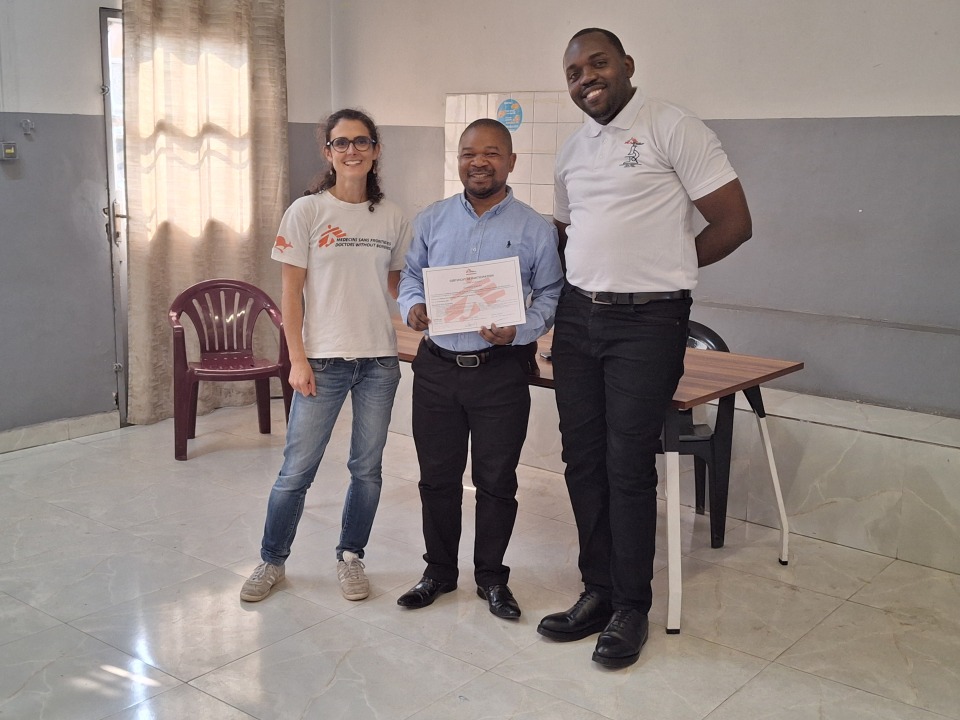
Dr. Kimbere Kisuba at his AMR certificate ceremony, DRC, february 2025
Kimbere Kisuba’s example perfectly reflects determination. Despite a context of total insecurity, he has shown that with the right tools and a supportive environment, it is possible to achieve one’s goals. His case is not unique, but his story leaves a lasting mark of hope and perseverance.