
Master of Child Health
To strengthen the paediatric skills of doctors working in MSF projects in French-speaking Africa.
The Master of Child Health is a two-year, practice-based, blended university programme designed to strengthen the paediatric and neonatal competencies of generalist medical doctors working in healthcare facilities run or supported by MSF in French-speaking contexts, mainly in West and Central Africa.
In many MSF projects, newborns and children make up a large share of patients, and paediatric and neonatal wards are often run by generalist doctors. The programme allows them to train without leaving their post: most learning takes place remotely and in the workplace, with their own patients.
The programme is developed and delivered in partnership with the Faculty of Health Sciences of the University of Abomey-Calavi (UAC), Benin. The degree is awarded by UAC as part of its academic offer and is regionally recognised by CAMES (African and Malagasy Council for Higher Education). All content is developed together with MSF’s international paediatric medical platform and the intersectional paediatric advisors.
The first cohort started in September 2026.
The Master’s programme in numbers
active learners
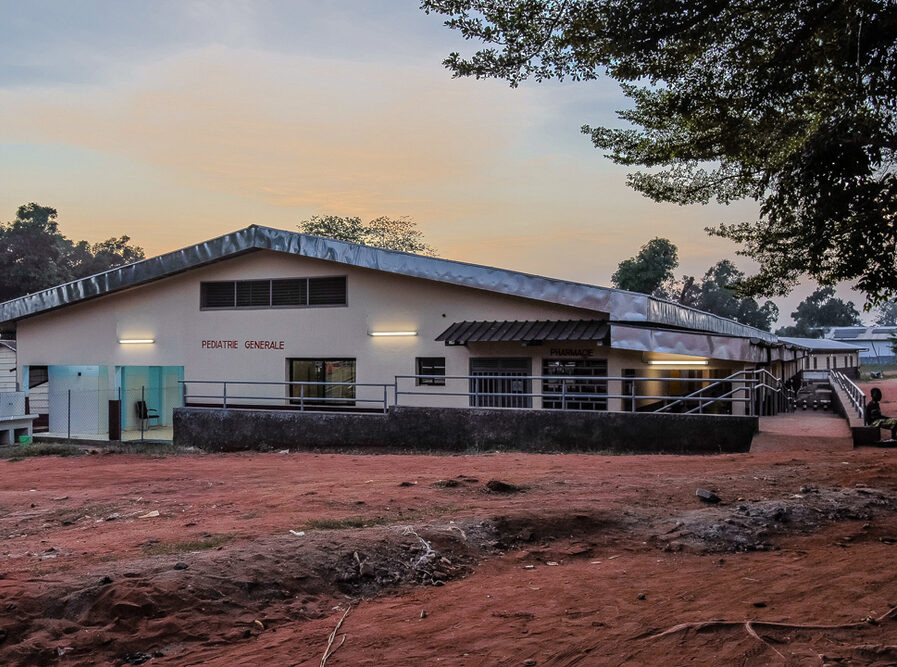
The programme
The Master’s follows a competency-based curriculum. The framework consists of seven competencies, each broken down into sub-competencies, covering care of children with common conditions, emergency care, preventive and health-promotion care, communication, quality improvement, ethics, and the supervision of health workers. Each course unit contributes to developing one or more of these competencies.
The objective is that graduates are able to
- manage common childhood conditions optimally, from age-appropriate history-taking and examination to differential diagnosis and interpretation of investigations.
- recognise, triage and stabilise paediatric and neonatal emergencies, and organise referral.
- provide curative, preventive and health-promotion care, including growth and development monitoring.
- communicate appropriately with children, families and the care team, and agree a shared care plan with families.
- lead an action-research or quality-improvement project in child health.
- apply the principles of ethics, professional conduct and accountability
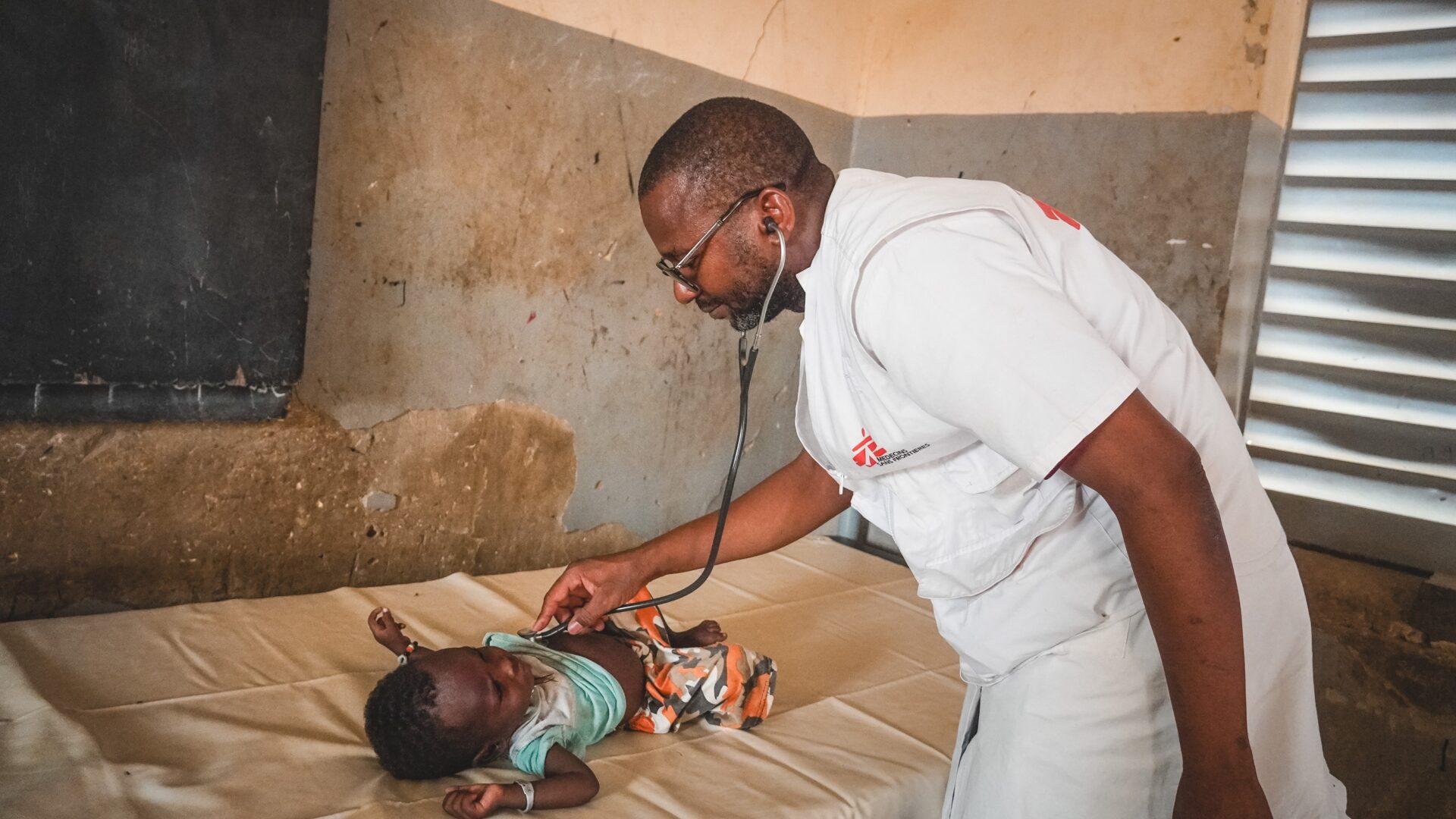 A clinical doctor during a consultation with a displaced child in Mali. © Aichata Diakité
Competencies are assessed throughout the programme through continuous assessment and exams, and also in daily practice: a portfolio of clinical activities including case-based discussions with the tutor, placement logbooks and reports, and the final project dissertation.
The programme combines self-paced e-learning and live online sessions, workplace-based clinical learning, individual remote tutoring, in-person sessions in Benin and a quality-improvement project.
It requires around 15 hours of dedicated study per week, including 5 to 8 hours of online learning, with the rest dedicated to clinical activities, the portfolio and the logbook.
The curriculum
Semester 1: Foundations and newborn care
Semester 2: Clinical reasoning, emergencies and acute conditions
Semester 3: Specific and chronic conditions
Semester 4: Final project
How to apply
Applications open once a year. Each candidate applies through their operational centre’s Learning & Development (L&D) unit, which centralises applications. Selection is made by an internal committee including paediatric referents, pool managers, career development advisors and the L&D unit. Selected applications are then submitted to the MSF Academy and to the University of Abomey-Calavi for validation.
Applicants must hold a medical degree or recognised equivalent, work in an MSF or MSF-supported project providing care to newborns and children and meet the university’s administrative requirements, including English proficiency. They should also discuss their application with their supervisor and career development advisor or HR contact.